.png)


Medicare Advantage Vs. Traditional Medicare
Traditional Medicare (also called Original Medicare) includes Medicare Part A and Part B, which give you inpatient and outpatient coverage.
The difference with Medicare Advantage plans (Part C) is that they include Part A and Part B coverage, plus much more.

Some of the benefits most Medicare Advantage plans have that
Original Medicare does not have include:
Prescription Drug Coverage
Medicare Advantage prescription drug (MAPD) plans are Part C plans combined with Part D prescription drug plans. While Medicare Part D provides only prescription drug coverage, Medicare Advantage plans can be combined to cover that and more.
Dental Care
Many Medicare Advantage plans offer dental care for things like routine checkups and exams, cleanings, dentures, and coverage for unplanned dental procedures like root canals and crowns.
Vision Care
Eye exams, glasses, and contacts are a part of many Medicare Advantage plans.
Hearing Care
Original Medicare doesn't cover hearing aids, which can be expensive. Many Medicare Advantage plans provide hearing coverage that includes testing and medically required hearing aids.
Over-the-counter health items
Many Medicare Advantage plans have allowances for common over-the-counter health items like aspirin, band-aids, and more.
Fitness Programs
Medicare Advantage plans give you options for maintaining a healthy lifestyle. Many plans include access to senior fitness programs and coaching to improve overall well-being.
Original Medicare or Medicare Advantage
Everyone has to pay Part A, B, D
Medicare Part A – Premium usually $0

Medicare Part B – Premium based on your Income
90% people deduct Part B premium from Social Security Benefits automatically


Not everyone needs Part A and Part B Medicare coverage right away
If you’re still working and receiving health insurance from an employer with more than 20 employees, you may choose to put off applying for Part B until you leave your employer’s group plan.
You’ll have an eight-month special enrollment period after you lose employer-provided health coverage to sign up for Part B.
90% people sign up at 65 because Part A is free, Part B is cheaper than company group insurance
If, however, you don’t qualify for special enrollment and you choose to enroll in Part B outside of the seven months surrounding your 65th birthday, you will be subject to pay an increased Part B premium amount every month after that.
Medicare Part C: Medicare Advantage Plans
Have Part A+ Part B and Part D included
Most have $0 Premium
Medicare Part D: Drug Coverage

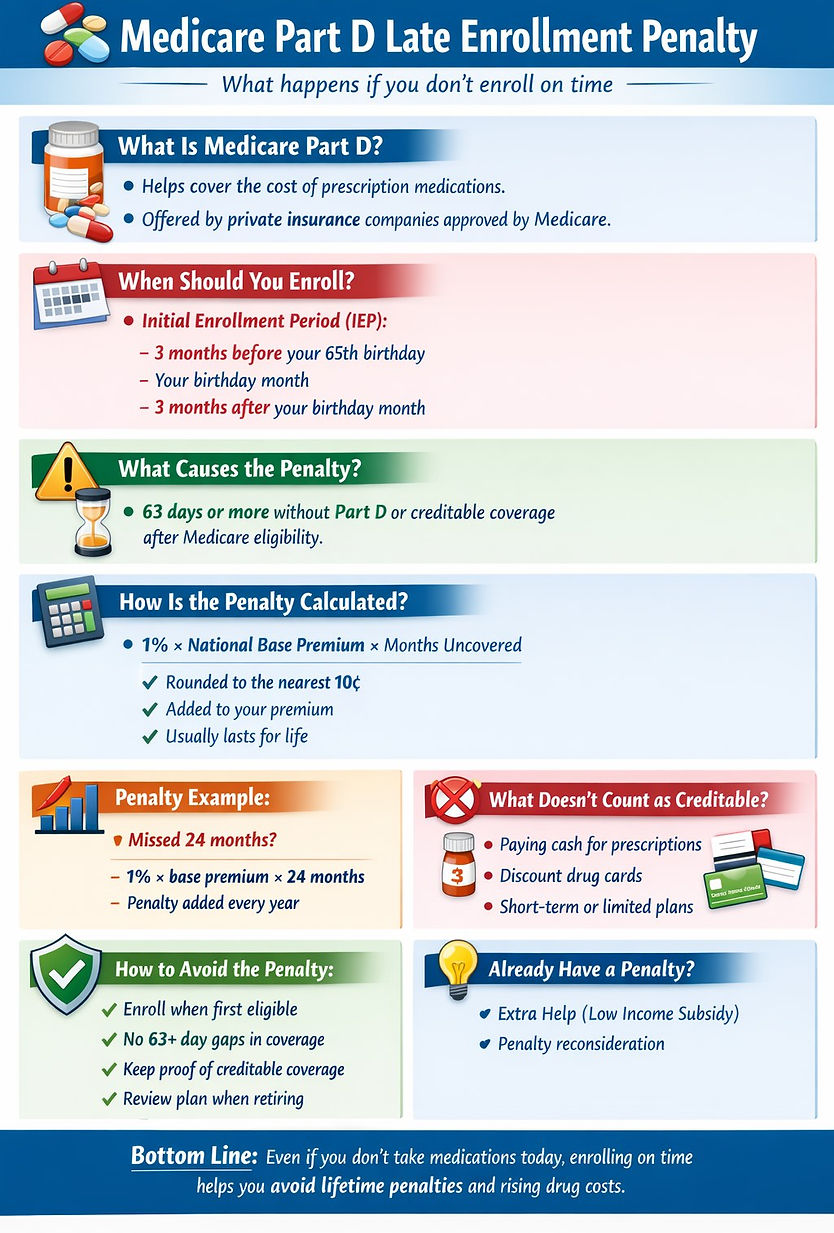
Medicare Advantage Plan come with Drug Plan with $0 premium (MAPD) plans
YOU CAN ONLY BUY DRUG COVERAGE FROM PRIVATE INSURANCE
Which plan is best for me?
You need to first understand the terminology of the plan
Maximum out-of-pocket (MOOP) - We feel this is most important
The maximum out-of-pocket is the most that you will be required to pay each year for deductibles, copayments and coinsurance on covered medical expenses.
It does not include the amount you pay for drug prescriptions and monthly plan premiums
What is Deductible:
A deductible is a set dollar amount you may be required to pay toward covered medical expenses within a single year before your health insurance company will begin paying for your care.
Most Medicare Advantage Plans have $0 medical deductible
What is Copay:
A copay is a set dollar amount that the policyholder agrees to pay for various kinds of care and treatment—like doctor visits, specialist visits, preventative care, and prescriptions. For instance, you may have a copay of $15 dollars when you go visit your primary care provider. Your insurance may cover the rest of the cost if you’ve reached your medical deductible
What is Coinsurance:
Coinsurance is the percentage % a policyholder pays for health services after the deductible has been met. For example, if the insurance covers 70%, you pay 30% coinsurance. You pay your coinsurance till you reach your MOOP
What is Medicare Drug Part D deductible:
Part D has separate deductible than Medical Medicare Part A and Part B.
For 2026 the maximum deductible is $615 (usually for tier 3,4,5)
For 2026 the maximum out if pocket is $2100
Example to make you understand the terms
Plan has the following
Maximum Medical out of pocket (MOOP) - $7,200
Primary Doctor Copay - $10
Specialist Copay - $15
Medical Deductible - $1,000
Coinsurance - 20%
Prescription Deductible - $615
Routine Checkup:
You go to the doctor for a cold. You pay your $10 copay at the desk.
Your insurance covers the rest of the visit's cost.
Medical Test:
The doctor orders an MRI that costs $800.
Since you haven't hit your $1,000 medical deductible yet, you pay the full $800.
Your medical deductible balance is now $200.
Emergency Visit:
Later, you have a minor injury that costs $500.
You pay the first $200 to reach your $1,000 deductible limit.
For the remaining $300 of that emergency bill will be coinsurance since you have not reached your $7,200 MOOP
You pay 20% x $300 = $60, insurance will pay 80%x300=$240
Surgery:
Later, you have a surgery that costs $10,000.
You have paid your deductible of $1,000 but you have not reached your MOOP yet
You pay 20% x $10,000 = $2,000, insurance will pay 80%x10,000=$8,000
You have paid $1,000 deductible plus $2,000 for surgery which is $3,000 but less than $7,200 MOOP
Hospital:
Later, you have hospital stay that costs $50,000.
You have paid $1,000 deductible plus $2,000 for surgery which is $3,000 but less than $7,200 MOOP
You pay 20% x $50,000 = 10,000, insurance will pay 80%x50,000=$40,000
BUT you will only pay $7,200 - $1,0000 - $2,000 = $4,200 not the $10,000 since you have reached your $7,200 MOOP
FOR THE REST OF YEAR EVEN IF YOUR HOSPITAL BILL IS $1,000,000 YOU PAY NOTHING
With Medicare Advantage Plan once you pay your yearly maximum out of Pocket (MOOP) than you pay nothing
Example for drug coverage Part D
Prescription Deductible - $615
Most MAPD plans have 5 tiers (read section Part D)
Most MAPD plans have the deductible for Tier 3,4,5
You need some generic medication - usually it in tier 1, cost $0 with no deductible
You need cancer drug - it is in tier 5, Cost is $10,000
You will pay the $615 deductible first.
Than you will pay the coinsurance 20% x$10,000= $2,000
There is Maximum limit for out of pocket on drugs - $2,100
You will pay total $2,100 not $615 +$2,000 = $2,615 over the drug MOOP
FOR THE REST OF YEAR EVEN IF YOUR DRUGS COST IS $1,000,000 YOU PAY NOTHING
Note: You need to read your plan summary of benefits to get the details
What do I need to look for in the plan ?
You should consider your own medical situation, like your Primary Care Physician (PCP), Specialist and the prescriptions you take.
Check which Hospital networks your doctors are in and if your prescriptions are covered by that plan’s formulary and in which copayment tier they fall.
Check what MOOP, copays, coinsurance, benefits you want from the plan
We have national carriers
Aetna, Devoted, Cigna Health Spring, Humana, United Healthcare, WellCare Centene, Wellpoint Anthem
Your PCP or hospital network will be in one or most of national carriers
A Primary Care Physician (PCP) may or may not be in a specific hospital's network, as they can be independent or affiliated with various health systems. You need to ask the doctor directly if they are in-network for your specific plan, or verify with the hospital's patient services
A PCP must contract with your specific insurance plan to be considered "in-network," regardless of their hospital affiliation.
Always confirm network status with your insurer to avoid higher, out-of-network costs
Do I choose HMO or PPO
When the time finally comes to select a health insurance company and plan, be sure to put your and your family’s specific medical needs under the microscope. You’ll want to reflect on how much and what type of treatment you’ve received in past years. Though it’s impossible to predict every medical expense, being aware of certain trends can help you make a more informed decision.
HMO health insurance plan consists of limited a network of doctors and hospitals from which you can receive treatment
You are simply focused on keeping your medical expenses at a minimum,
Your primary care physician who will refer you to specialists when you need additional treatment
Most people have HMO
PPO plans offer customers a more extensive network of doctors and hospitals to choose from.
You can afford higher premiums and already know that you’ll need to visit specialists frequently because of existing health conditions
If you’re constantly on the go, as you’ll have a better shot of receiving care that’s fully covered by your provider when you’re on the road.


Original Medicare
Part A: Pay medical cost unless you buy Medigap plan
Part B: Pay 20% of medical cost unless you buy Medigap plan
Part D: Pay for Prescription Drugs Plan


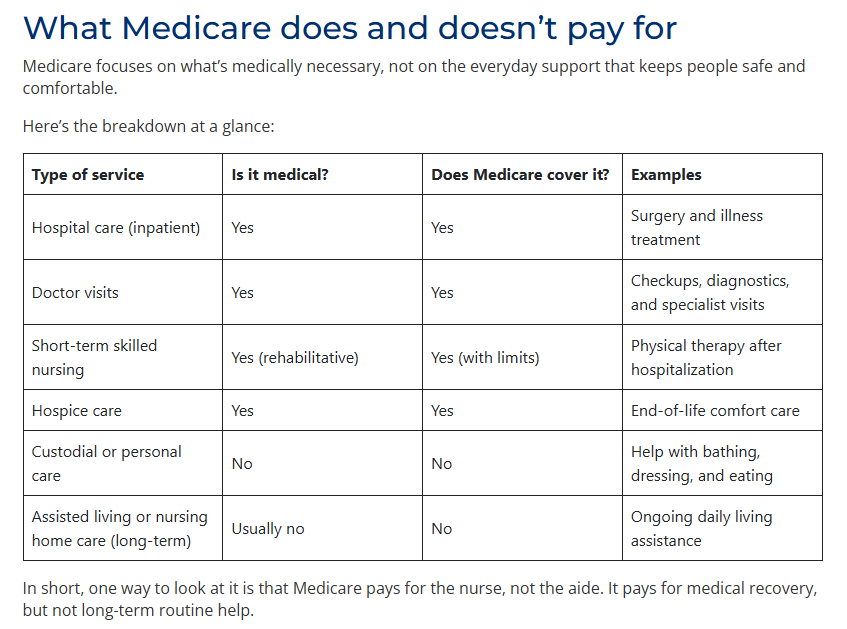

Medicare DOES NOT PAY for Long-Term Care?
Medicare was built to cover medical treatment, like doctor visits, hospital stays, and short-term skilled care when someone is recovering from illness or injury.
Long-term care, on the other hand, usually focuses on daily assistance with personal tasks such as bathing, dressing, or eating. Those services are considered custodial care, not medical care, and therefore, Medicare doesn’t pay for them.
That surprise catches many families off guard, but once you understand the logic behind Medicare’s design, you can start planning for what comes next.
After 100 days in a skilled nursing facility (SNF), Medicare Part A coverage ends, making you responsible for all costs
A new 100-day benefit period can only start after you have stopped receiving skilled care in a hospital or SNF for 60 days in a row
Why Medicare doesn’t pay for long-term care
Medicare’s original purpose was to fund medical treatment, not lifelong assistance with daily tasks. Remember:
-
Skilled care requires licensed professionals to improve or stabilize a medical condition.
-
Custodial care is nonmedical support that keeps you safe and comfortable day to day.
For example:
-
A stroke patient receiving therapy to regain mobility → Skilled care → Covered.
-
The same patient, months later, who needs help dressing and eating → Custodial care → Not covered.
Understanding that divide helps families plan realistically and early.
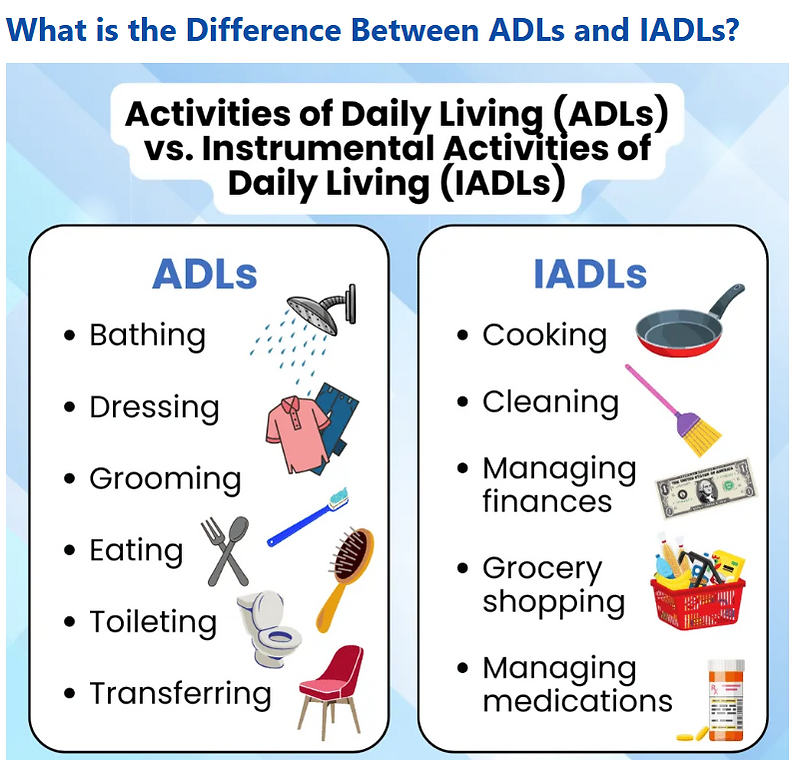
How ADLs and IADLs Affect the Senior Living Process
This assessment helps determine the most suitable senior living community, whether it is independent living, assisted living, memory care , or a skilled nursing facility
When Medicare pays for care at a skilled nursing facility
Medicare does pay for short-term care at a skilled nursing facility after a qualifying hospital stay. To qualify, among other conditions, you must:
-
Spend at least three consecutive days as an inpatient in a hospital (not just for observation).
-
Need skilled therapy or nursing services such as IV medications or wound care.
-
Require care that’s rehabilitative, aimed at helping you get better and return home.
After you qualify, Medicare covers up to 100 days in a skilled nursing facility per benefit period. Your responsibility is as follows:
-
For days 1 to 20, you have a $0 copay.
-
For days 21 to 100, you pay daily coinsurance.
-
Beyond day 100, you pay all costs.
-
As soon as your need for skilled care ends, coverage stops, even if you still need help getting dressed or moving around. That type of help counts as custodial care, and Medicare won’t pay for it.
Does Medicare Advantage pay for long-term care?
Medicare Advantage (Part C) plans must cover at least what original Medicare covers. Some plans offer small extras, such as short-term home support, caregiver training, or meal delivery after a hospital stay. However, they don’t cover ongoing long-term care.
Those small perks can make recovery easier, but they’re not a substitute for full-time assistance at home or in assisted living.
Other long-term care coverage options
Long-term care is expensive, but there are other ways to help pay for it.
-
Medicaid:is the only government program that pays for long-term care, including nursing homes and some home-based services. Eligibility depends on strict income and asset limits, and rules vary by state. Many families don’t qualify until they’ve spent down most of their savings.
-
Long-term care insurance: LTCI policies are built specifically to cover personal or custodial care at home or in a facility. You must purchase coverage before you need it, and premiums rise with age and health risks.
-
Veterans benefits: Qualifying Veterans and surviving spouses may receive benefits that can help pay for care. For example, Aid and Attendance is a monthly benefit that helps pay for assistance with daily activities.
-
Private pay and asset planning: Many families pay for long-term care with savings, home equity, a home sale, or investments. Working with a financial planner or an elder law attorney can make a big difference. It can help you protect your assets, make timely care decisions, and avoid costly missteps.
Planning ahead for peace of mind
The answer to “Does Medicare pay for long-term care?” may be disappointing, but it doesn’t have to be discouraging. Medicare does its job well: It pays for doctors, hospitals, and short-term rehabilitation. Long-term care planning just takes a different tool kit.
Medicare takes care of your medical needs. Long-term care requires its own plan. By understanding what Medicare does and doesn’t cover, you can build a plan that protects your health, savings, and future
How to Describe Your Daily Limitations to Social Security
The Social Security Administration (SSA) considers you disabled if you have a medical condition that keeps you from working full-time for at least one year. To determine whether you’re able to work, the agency will ask you to complete an activities of daily living (ADL) questionnaire when you apply for disability benefits.
The ADL form is important because it shows Social Security what types of tasks you have trouble doing at home that you’re likely to struggle with in a work environment.
Just because you don’t do anything that you consider particularly notable doesn’t mean it’s not important to Social Security.
Your ADL questionnaire is most effective when you provide specific examples of how your medical condition limits your ability to complete your daily routine, both physically and mentally. Too many disability applicants miss the opportunity to complete this form thoroughly, however, resulting in denials at the early stages of the disability determination process.
Knowing what information you can use to describe how your impairments limit your ability to work can increase your chances of getting your application approved faster.
How to Describe The Impact of Your Disability on Your Activities of Daily Living
When something “goes wrong” with your health, you might not be able to perform your activities of daily living to the same degree that you used to do. Even seemingly minor issues can be very important for your Social Security disability claim, since they may rule out jobs involving repetitive engagement with a similar task.
The ADL questionnaire (officially Form SSA-3373) asks about any difficulties you experience in a wide variety of daily activities, such as chores, social interaction, and getting around town. The parts of Form SSA-3373 that focus specifically on your abilities are sections C and D. Completing these sections properly can help Social Security understand what your functional limitations are and why they prevent you from working. Let’s look at them in more detail.

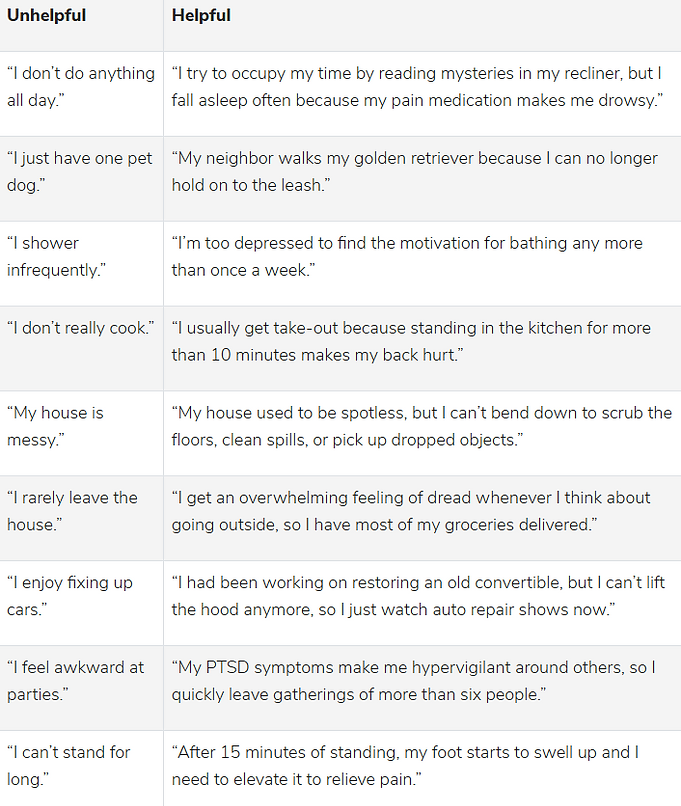
Examples of Helpful vs. Unhelpful Activities of Daily Living Descriptions
Figuring out the “right” and “wrong” way to fill out your ADL questionnaire can be confusing and frustrating. Honesty is always the best policy, but you can frame your honest answers in a way that best addresses what Social Security is looking for in order to determine that you’re disabled
The chart below contains several examples of “helpful” and “unhelpful” answers on the ADL form.
Sample list of Houston Hospitals & Physician Groups
Major hospital networks in Houston accepting Medicare include Houston Methodist, Memorial Hermann, HCA Houston Healthcare, CHI St. Luke's Health, and Harris Health System. These systems, along with many specialized centers, provide coverage for Medicare beneficiaries. Houston Methodist, for example, is in-network with many Medicare Advantage plans
Non-covered Charges: Costs for services that your insurance plan doesn’t cover. Examples can include certain drugs, procedures, or alternative therapies.
Excess Charges: Additional charges from a provider who doesn’t accept your insurance plan’s payment as full reimbursement. Common in plans without out-of-network benefits or in Medicare Part B.
